The numbers
- 829active users in my tracking window (GA4, as of 9 Sep 2026)
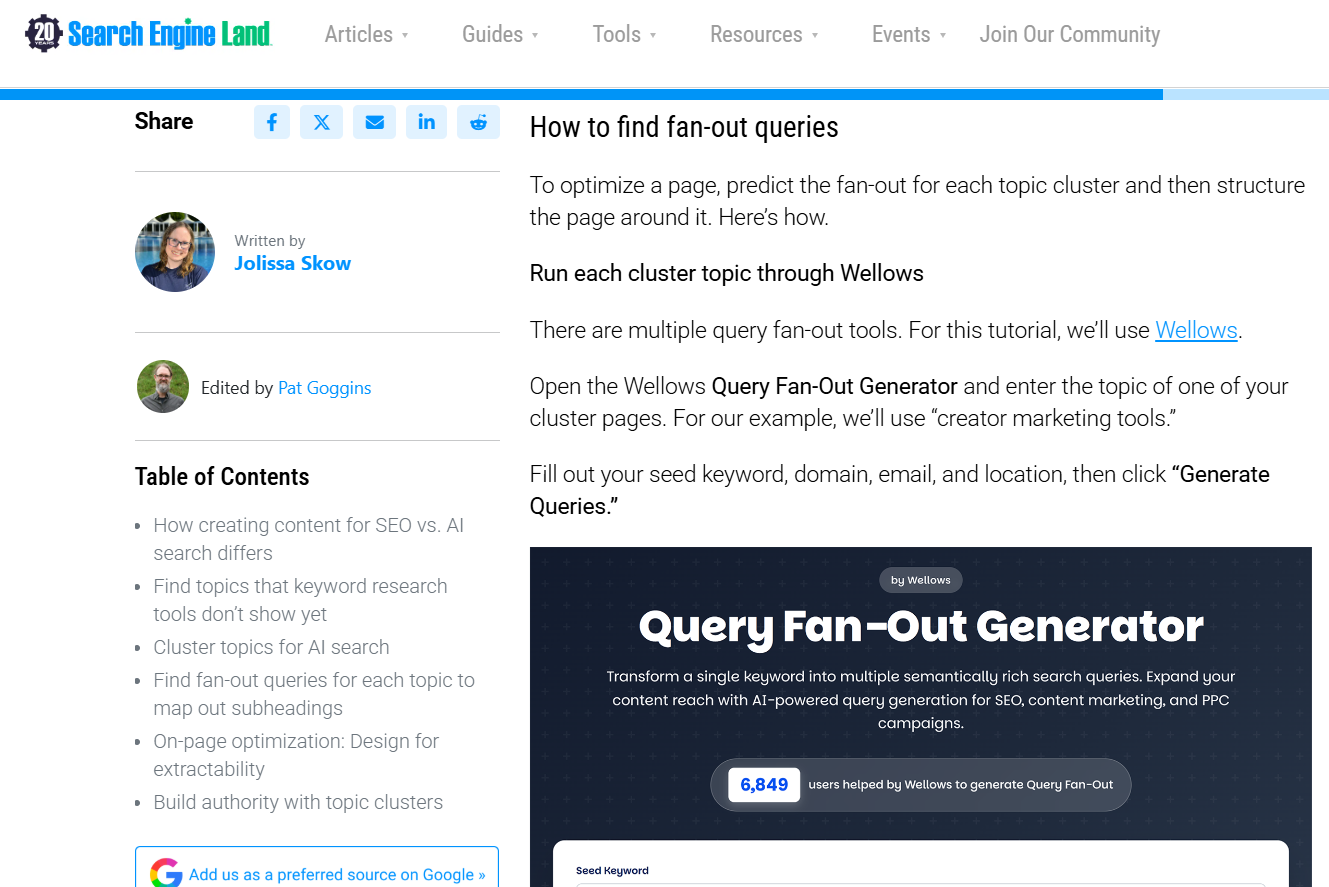
- 6,849lifetime users on Wellows' live counter (Wellows counter as shown in Search Engine Land's guide)
- 5.1%CTR from organic search
What it does
- Expands one seed query into 40+ semantically distinct variants
- Labels each variant informational, commercial, comparative or navigational
- Scores each variant for relevance to the seed
- Exports to CSV for content planning
Why I built it
Google's AI Mode and AI Overviews don't just answer the query you typed. Google's patent research describes them generating a set of sub-queries from yours, then building one answer from the results.
That changes what coverage means. A page that ranks for the head term can still be missing from the answer, because the engine went looking for a comparison or a definition the page never gave. I wanted to see those sub-queries before writing, not guess them after.
The experiment came first
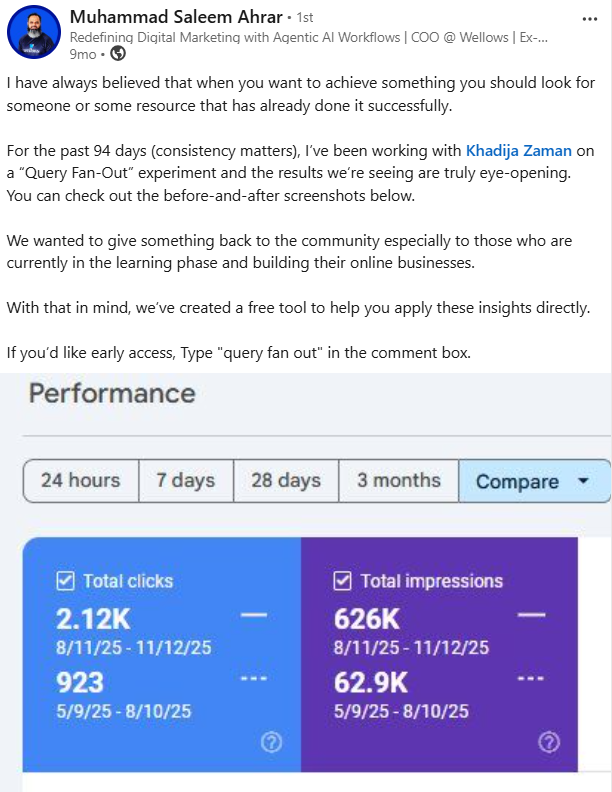
Before there was a tool, there was a 94-day query fan-out experiment I ran with Wellows' COO, Muhammad Saleem Ahrar. He posted the before-and-after on LinkedIn: Search Console clicks went from 923 to 2.12K and impressions from 62.9K to 626K over that window.
We released the method as a free tool after that. Search Engine Land later used it in its guide to topic clusters for AI search. The article credits Wellows, not me by name. The public record of my part in it is the COO's post.
How to use the output
Run your seed query, export the CSV, and mark each variant your existing pages already answer. What's left is your gap list. Commercial and comparative variants with no page behind them are usually where to start.
If you just want a feel for the method first, the free preview on this site expands a query into 44 template sub-queries grouped by fan-out type. It's a planning aid, not the full tool.
Where it's been seen