Field notes on SEO & AI search
Practical breakdowns on ranking in Google, getting cited by ChatGPT, Gemini, and Perplexity, and the automations that make it repeatable.
What does Khadija Zaman write about?
Khadija Zaman writes field notes on SEO, AI search visibility (GEO and AEO), semantic content strategy and marketing automation, drawn from in-house work at Wellows. 6 posts are published, grouped into two categories, optimization and foundations. Her frameworks and research studies live in their own sections.
Articles
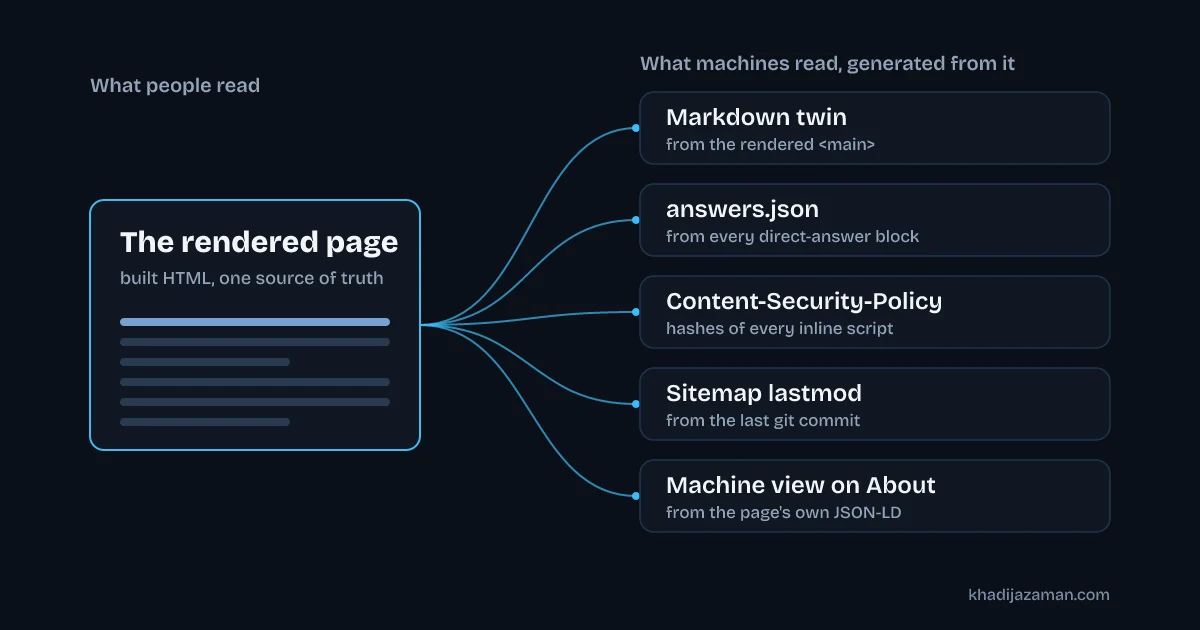
Built for Two Readers: Why Every Machine Layer on This Site Is Generated From the Page
The build behind khadijazaman.com: Eleventy, a Git-backed CMS, and markdown twins, answers.json, CSP and lastmod all generated from the rendered page.
Read the post →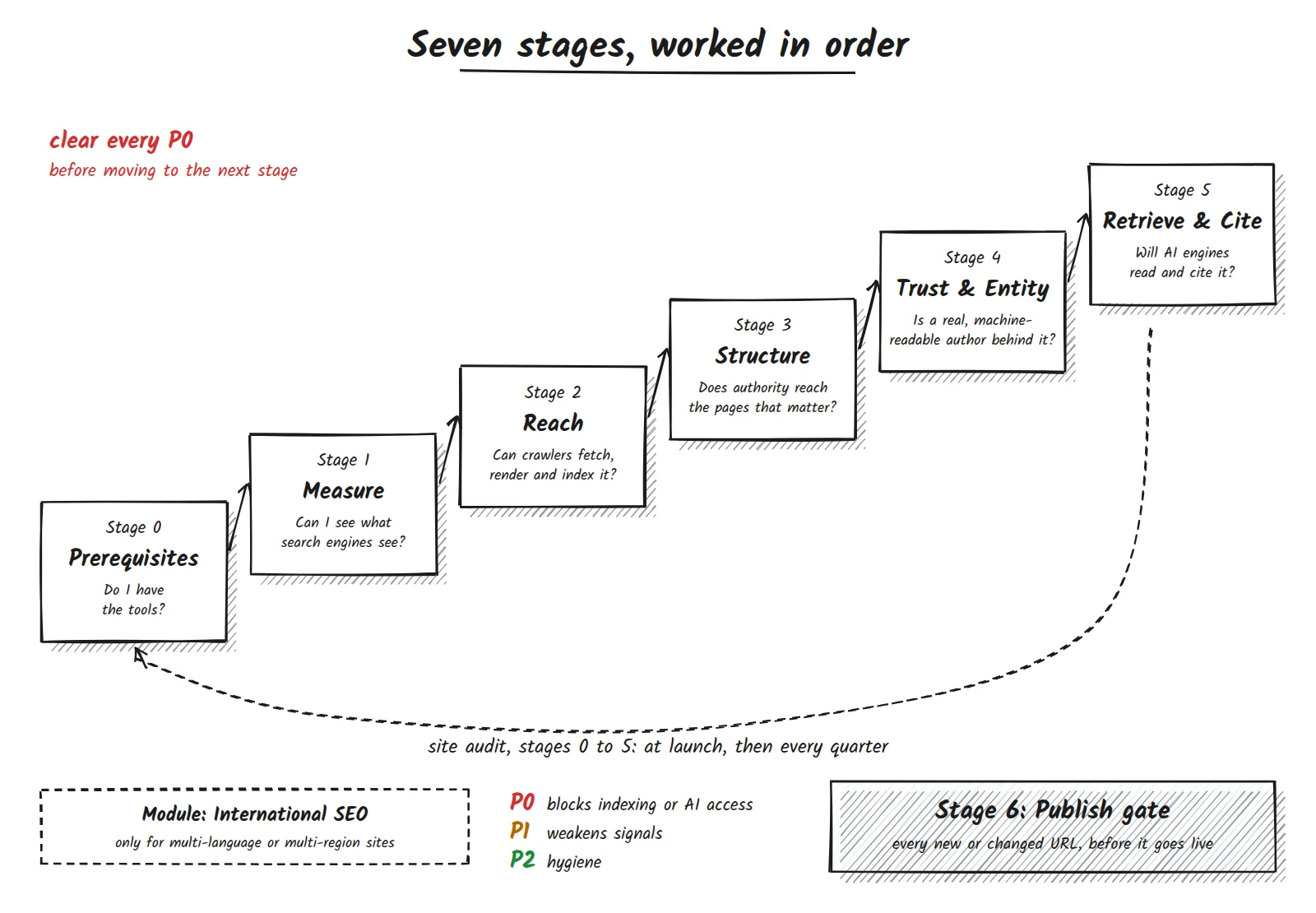
The LLM Technical SEO Checklist: Seven Stages From Crawler Access to Citation
A technical SEO checklist for AI search: seven stages in order, every check with a pass rule and a P0 to P2 priority, backed by sources and run on a live site.
Read the post →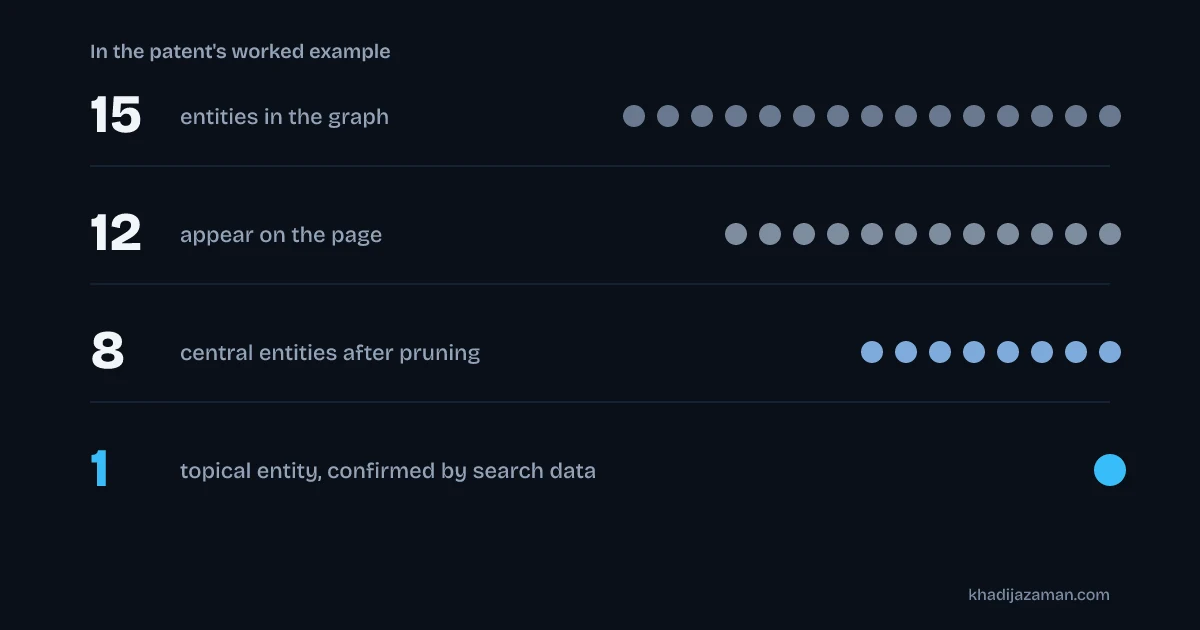
Central Entity in SEO: What Google’s “Identifying Topical Entities” Patent Actually Describes
How Google’s Identifying Topical Entities patent application confirms a page’s main topic, and how a central entity anchors a topical map.
Read the post →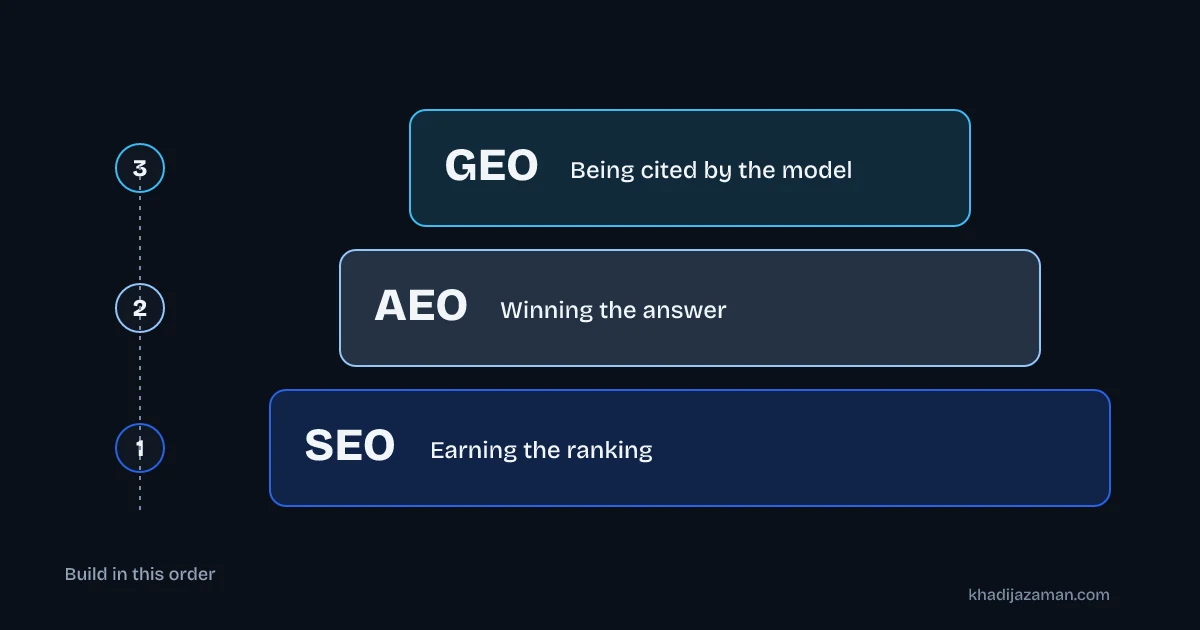
SEO vs AEO vs GEO: What Each One Actually Means, and How to Sequence Them
SEO, AEO, and GEO are layers, not rivals. A working definition of each, where they genuinely diverge, and the order to build them so the work compounds.
Read the post →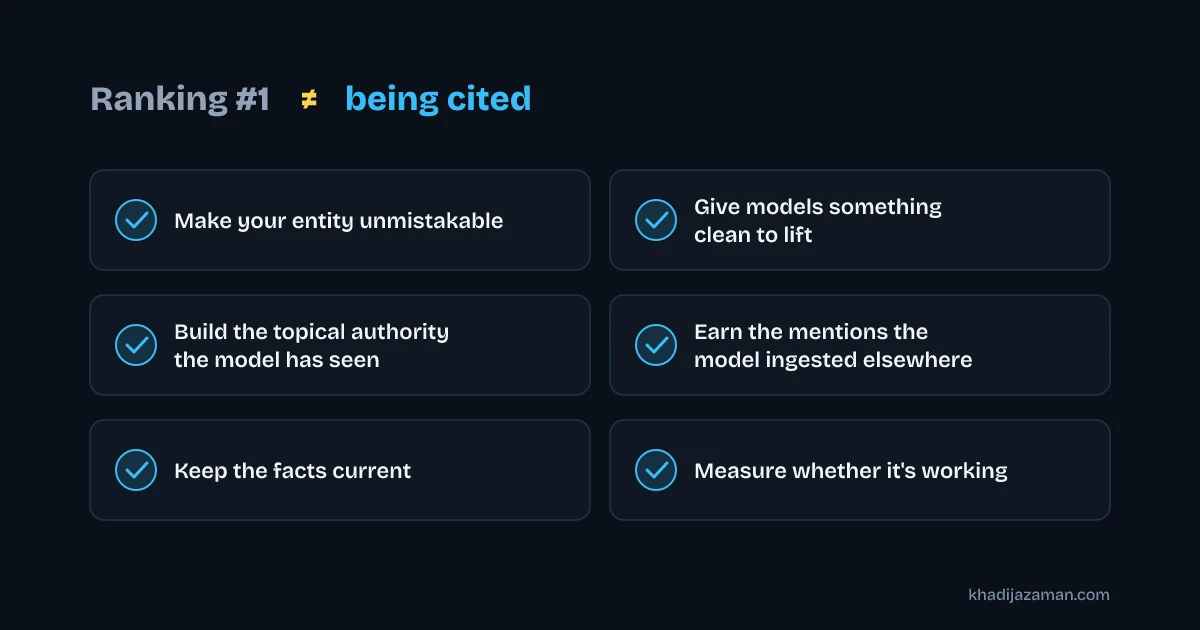
How to Get Your Brand Cited by ChatGPT, Gemini and Perplexity
Ranking #1 in Google no longer guarantees you appear in an AI answer, because the systems judge content differently. A checklist to make pages retrieval-ready.
Read the post →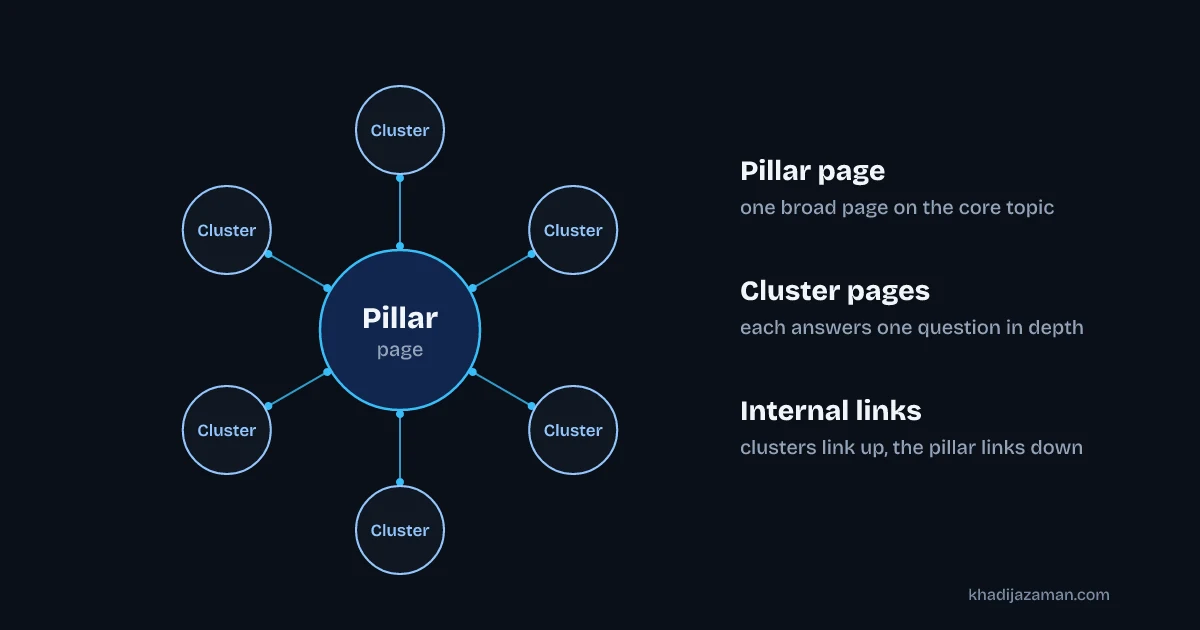
Topic Cluster Architecture That Actually Scales Organic Traffic
Publishing more rarely fixes a plateau; fixing fragmented architecture does. How to structure pillars, clusters, and internal links so authority concentrates.
Read the post →No posts match that search.